Max Planck Research Group, headed by Gordon M. Friedrichs, funded by the Max Planck Society (2026-2032).
The Max Planck Research Group “Constellations of Global (Dis)Ordering” (DISORDER) investigates how global order is changing amid intensifying geopolitical rivalry and growing contestation over the principles, rules, and institutions that structure international relations. Led by Dr. Gordon Friedrichs and funded by the Max Planck Society (2026–2032), the group examines how states seek to shape this global disorder through international institutions and networks of interdependence, and how they legitimize these strategies.
Contemporary international politics is marked by the simultaneous contestation of established rules and institutions and continued reliance on them. States connect and layer institutions, create overlapping or alternative arrangements, bypass or disengage from existing ones, and strategically leverage economic and technological interdependence. The group understands global disorder not as the absence of order, but as the disruption and fragmentation of established rules, institutions, and relationships as competing projects of order unfold. To capture these processes, the group examines constellations of global (dis)ordering: patterns of institutional coupling and decoupling through which states advance competing visions of order. Such constellations may reinforce existing forms of order, construct alternatives, or erode established institutional arrangements. By tracing these dynamics across the fields of security, economy, and technology, DISORDER develops a process-oriented understanding of global order that moves beyond accounts centred on decline, replacement, or a linear transition from one order to another.
The research program approaches constellations of global (dis)ordering through three interrelated dimensions. First, visions of order refer to the principles, rules, norms, and institutional roles that states seek to promote. They provide competing answers to fundamental questions about how international relations should be organized and what kinds of political and institutional arrangements should underpin global order. Such visions may emphasize, for example, liberal multilateralism, sovereignty, multipolarity, strategic autonomy, civilizational pluralism, or more transactional approaches to international cooperation.
Second, DISORDER examines the strategies of (dis)ordering through which states translate these visions into institutional practice. A central set of strategies concerns institutional coupling and decoupling: states may connect and layer existing institutions, create overlapping or alternative formal and ad hoc arrangements, or bypass and withdraw from established institutions. They may also rely on flexible coalitions or strategically leverage asymmetric interdependence. DISORDER thus investigates how states use institutional architectures and networks of interdependence to advance competing projects of order.
Third, the group studies the legitimation and consequences of these strategies. Processes of (dis)ordering are accompanied by claims about legality, effectiveness, necessity, sovereignty, representation, and legitimacy. States seek to justify the use, creation, bypassing, or replacement of particular institutions and to present specific arrangements as legitimate foundations of international order. DISORDER examines how these justificatory practices interact with strategies of (dis)ordering and how, together, they contribute to producing, transforming, or eroding particular forms of global order.
Empirically, the research programme investigates these dynamics across three central domains: security, economy, and technology. In the security domain, potential areas of inquiry include institutional arrangements concerning war and peace, post-conflict governance, and arms control. In the economic domain, research may examine trade and finance as well as the strategic uses of economic interdependence. The technology domain may include artificial intelligence and other strategic technologies, with particular attention to emerging institutional arrangements, technological standards, critical infrastructures, and competing regulatory approaches.
The research group combines actor-centred and domain-centred perspectives. Actor-centred research examines how individual great or middle powers pursue particular visions of order across different domains and institutional settings. Domain-centred research compares how different states pursue strategies of (dis)ordering within a particular domain and how these strategies generate distinctive constellations of global (dis)ordering. To study the legal mandates, justificatory claims, and normative changes through which different forms of global order are constituted and contested, the group also draws on the productive intersection between International Relations and international law.
Through this research programme, DISORDER seeks to explain changes in global order beyond narratives of decline, fragmentation, or replacement. Its central ambition is to identify how different constellations of global (dis)ordering reinforce, challenge, or construct forms of international order, and thereby to better understand the consequences of intensifying geopolitical rivalry within an increasingly complex institutional landscape.
DISORDER benefits from collaboration with the Heidelberg Academy research project "In the Age of the Polycrisis", led by Dr. Gordon Friedrichs, which examines how interconnected crises affect political orders and their capacity to respond to growing complexity. It also has close links to the Max Planck Research Group "The Multiplication of Authorities in Global Governance Institutions" (MAGGI), led by PD Dr. Janne Mende, which examines changing authority in a transforming global order. Further synergies arise with the Institute’s research on International Public Authority, directed by Prof. Dr. Armin von Bogdandy, Global Constitutionalism and Global Challenges, directed by Prof. Dr. Anne Peters, and International Law of Cooperation in Antagonistic Times, directed by Prof. Dr. Helmut Aust.
tba
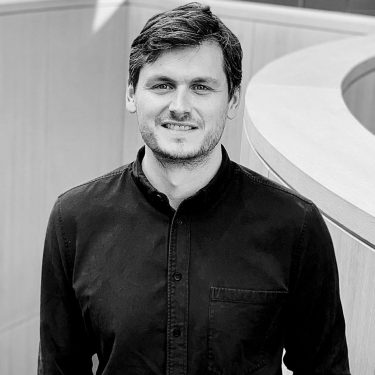
Dr. Gordon M. Friedrichs, (Research Group Leader)
Gordon Friedrichs is a political scientist specializing in International Relations and Foreign Policy Analysis. He leads the Max Planck Research Group “Constellations of Global (Dis)Ordering” (DISORDER), as well as the project “In the Age of the Polycrisis” at the Heidelberg Academy of Sciences and Humanities. His research examines polarization and populism in democratic foreign policymaking, international organizations, and the reconfiguration of global order. Previously, he held positions at Sciences Po Paris, the University of Freiburg, Heidelberg University, and the MPIL, as well as visiting positions at the University of Notre Dame, Yonsei University, and Charles University in Prague.